We get this question from homeowners and commercial clients alike: how long does artificial turf actually last? It’s a fair thing to ask before you commit to an installation. The honest answer is that lifespan varies—but commonly cited ranges put quality artificial turf at roughly 15 to 20 years under normal residential use. Some installations last longer; high-traffic or harsh-environment installs can see wear sooner.
What we’ve found in the yards we install across Phoenix, Mesa, Gilbert, and the broader Valley is that lifespan isn’t just about the product—it’s about the whole system. The base, the infill, the installation quality, and how you maintain it all play a role. Here’s how to think about it.
Key takeaways:
- Artificial turf commonly lasts 15–20 years, though the real range depends on traffic, climate, product quality, and maintenance.
- Arizona’s intense UV and heat put extra stress on turf fibers—UV-stabilized products and proper base prep are essential here.
- Good installation (compacted base, adequate drainage, correct infill) has a bigger impact on longevity than most buyers realize.
- Regular brushing and infill maintenance are the simplest ways to extend lifespan.
What “Lifespan” Actually Means for Turf
When manufacturers and installers talk about turf lifespan, they’re generally referring to when the fiber system begins to show significant degradation—thinning, matting, fading—that meaningfully affects performance and appearance. The backing and infill may still be functional long after fibers start to show wear, or vice versa.
It’s worth being clear: no specific lifespan figure can be guaranteed for every installation. The 15–20 year range is widely cited in the industry and holds up as a reasonable benchmark for quality residential turf under moderate use. But a high-face-weight product in a low-traffic ornamental yard could outlast that easily. A lightweight turf in a backyard with two large dogs and daily use might show wear in ten years. Context matters more than any single number.
The Factors That Affect How Long Artificial Turf Lasts
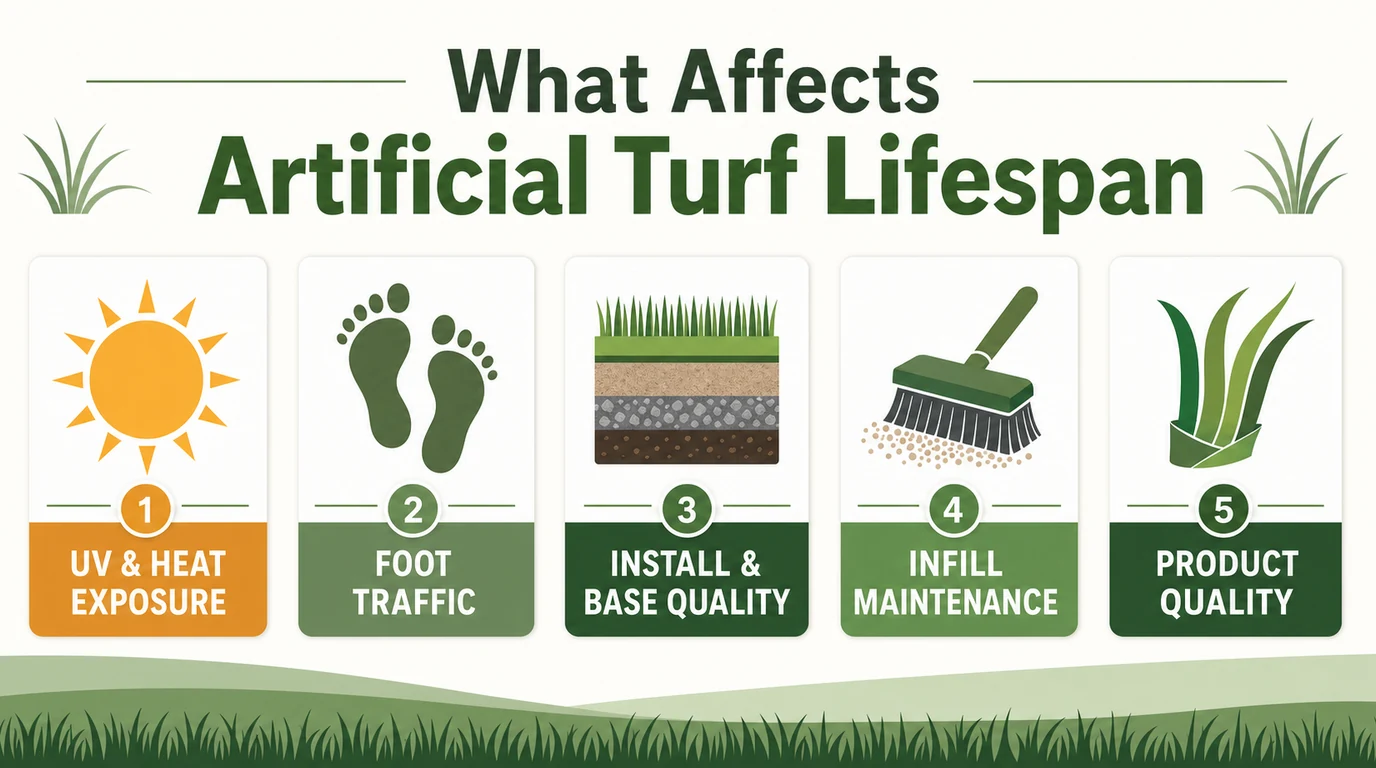
1. UV Exposure and Heat
This is the big one for Arizona installs. UV radiation is the primary cause of fiber degradation in artificial turf. The sun breaks down polymer chains in the fiber over time, leading to fading, brittleness, and eventually fiber breakdown.
Phoenix gets more sun hours per year than almost anywhere in the continental US. Our summers run brutally long—full sun from April through October. That’s a compounding stress on turf fibers that homeowners in Seattle or Chicago simply don’t face at the same level.
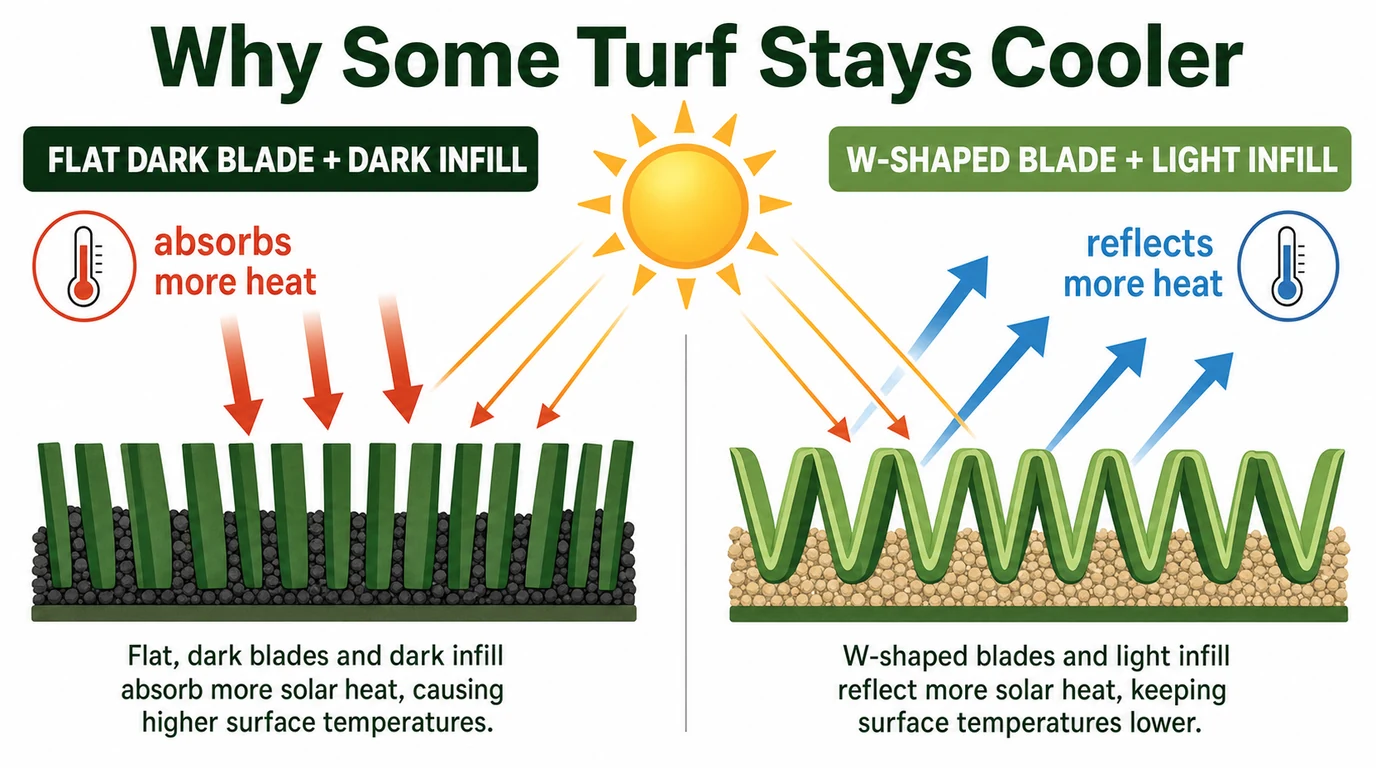
What helps: UV-stabilized polyethylene fiber, which is standard in quality products. Lighter-colored turf tends to reflect more heat and can show less thermal stress than very dark varieties. We also discuss how artificial turf handles Arizona heat separately—understanding the heat dynamic helps you set realistic expectations.
2. Traffic and Use Patterns
More traffic means more mechanical stress on the fibers. Every footstep compresses and laterally stresses the blade. In a low-traffic decorative side yard, a quality turf can look great for many years with minimal maintenance. In a backyard that functions as a play field for kids and dogs every day, wear accumulates faster—especially in high-traffic corridors.
What helps: Choosing a denser, higher face-weight turf for areas that will see heavy use. A product like Lush 80—with its denser pile—is better suited for active yards than a lighter option. Also, alternating foot paths when possible and brushing the pile regularly both extend the life of the fiber in heavy-use zones.
3. Installation Quality and the Base
This is probably the most underestimated factor. A turf system is only as good as what’s underneath it. A properly compacted aggregate base—typically decomposed granite in Arizona applications—creates a stable, free-draining foundation that keeps the turf level and prevents the seams, edges, and backing from stressing under foot traffic.
When the base isn’t properly compacted, you get settling. Settling creates low spots, stress on seams, and areas where water pools rather than drains. Pooling water and moisture trapped under turf accelerates both backing degradation and odor issues. In Arizona, we also have to account for caliche—that hard calcium carbonate layer beneath many Valley soils—which needs to be broken through or worked around to establish proper drainage.
Professional installation with a correct base adds years to the lifespan of your turf. If you want the full breakdown of what goes into proper installation, our artificial turf installation guide covers it in detail.
4. Infill Maintenance
Infill does more than you might think. It supports fiber blades in an upright position, cushions impact, and in pet applications helps manage drainage and odor. When infill compacts or migrates out over time, blades have less support and lie flat under foot pressure—accelerating matting.
In high-traffic or pet-use areas, infill levels should be checked periodically and topped up as needed. Our turf infill guide covers infill types—from standard silica sand to coated antimicrobial products for pet yards—and helps you pick the right option.
5. Product Quality and Face Weight
Not all turf is built to the same standard. Face weight (the weight of fiber per square yard, measured in ounces) is one of the most reliable indicators of durability. A higher face weight means more material—more fiber to absorb wear before thinning becomes visible. Pile height matters too: a well-proportioned pile that isn’t too tall holds up better under lateral stress.
Backing quality is equally important. A quality dual-layer or polyurethane-coated backing resists delamination, holds turf nails better, and stands up to temperature cycling—relevant in both Arizona’s extreme heat and Utah’s freeze-thaw winters.
How Long Does Artificial Turf Last in Arizona Specifically?
Arizona’s climate is genuinely tough on turf. The combination of:
- Extreme UV index (some of the highest in North America)
- Long, hot summers with minimal cloud cover
- Significant temperature swings between summer days and winter nights
- Minimal rainfall that limits natural rinsing
…all create conditions that can accelerate fiber aging compared to milder climates. That said, this doesn’t mean Arizona turf won’t last—it means product selection and maintenance matter more here. UV-stabilized fibers, quality backing, and a properly prepared base are non-negotiable in the Valley.
We see installs in the Phoenix metro that are holding up well well into their second decade. We also see early failures—almost always traced back to a lightweight product or a poorly prepared base, not just the climate itself.
For Utah installs, the dynamic is different: freeze-thaw cycles in places like Salt Lake City and Provo stress the base and backing in ways that are less of an issue in Arizona. In both regions, the installation foundation is the common denominator for long-lasting performance.
How to Extend the Life of Your Artificial Turf
Getting to the long end of the lifespan range—or beyond it—comes down to a few consistent habits:
- Brush the pile regularly. A stiff-bristle broom or power broom lifts flattened fibers back upright. In high-traffic areas, brushing a few times a year makes a real difference. Always brush against the grain of the pile.
- Rinse it periodically. A hose-down rinses away dust, pollen, and pet waste residue. In Arizona, this also has a cooling effect during summer. You don’t need to soak it—just a solid rinse.
- Top up infill as needed. Inspect infill levels annually, especially in pet areas or where foot traffic is concentrated. Keeping infill at the right depth supports the fiber and cushions impact.
- Keep it clear of debris and staining materials. Organic debris (leaves, tree sap, rotting matter) held against turf for extended periods can stain and degrade fiber. Remove debris promptly.
- Don’t use harsh chemicals. If you need to spot-clean, use mild, pH-neutral cleaners. Harsh solvents can degrade fiber coatings and backing adhesives over time.
- Protect from sharp or abrasive objects. Metal furniture legs without caps, sharp garden tools, and abrasive surfaces dragged across turf accelerate localized wear.
Professional artificial turf installation that includes a quality base and correct infill from the start is the single biggest long-term investment—maintenance after the fact can only do so much if the foundation wasn’t right.
Signs Your Turf May Be Nearing the End of Its Life
Not sure if your turf is worn out or just needs some maintenance? Here are the indicators that suggest replacement—rather than refresh—is the right call:
- Fiber thinning or bald patches that don’t respond to brushing and infill top-up
- Fibers that stay matted flat even after brushing with a stiff broom
- Cracked, separated, or buckled backing across large areas
- Seam failure that can’t be repaired with adhesive
- Persistent odor even after deep rinsing and antimicrobial infill replacement
- Significant fading or color inconsistency across the field, beyond normal weathering
Minor wear in one concentrated zone doesn’t always mean a full replacement is due. Section repairs are sometimes possible and cost-effective. But if you’re seeing multiple signs of the above across the surface, it’s worth getting a professional assessment.
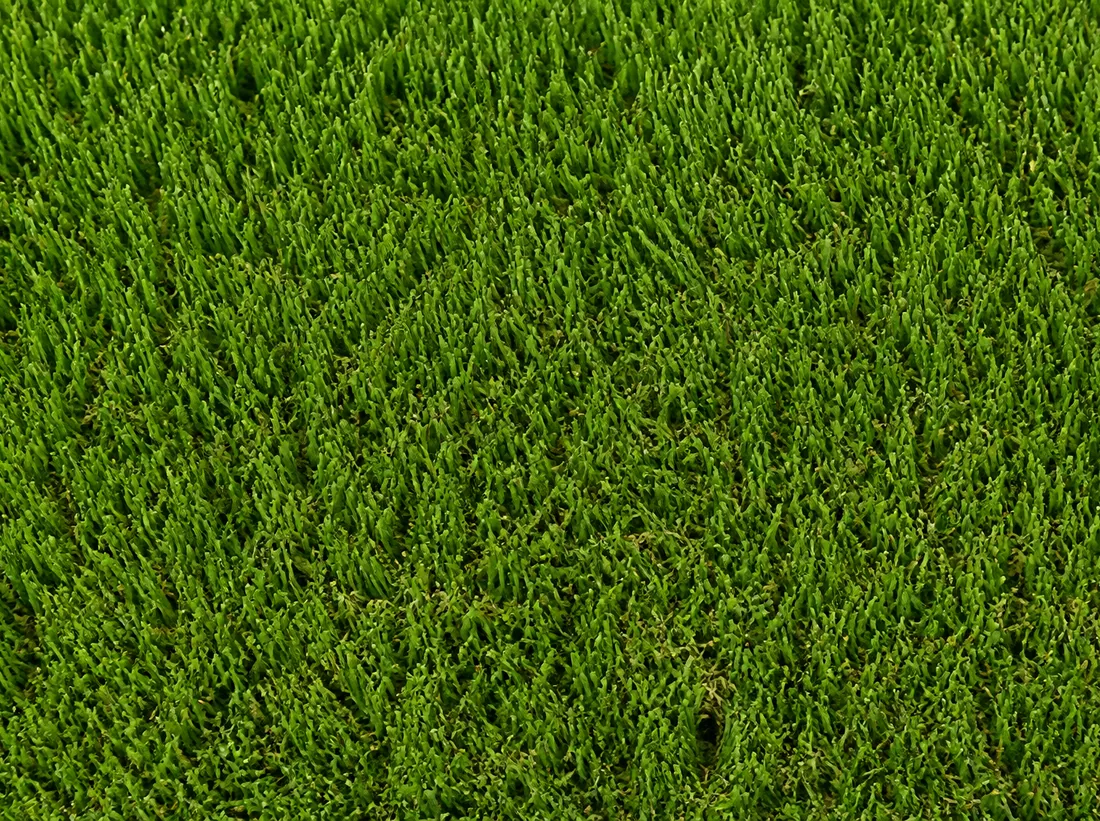
Lush 80 Artificial Turf
A premium, realistic turf with a fuller feel — a balanced fit for lawns, pets, and active yards.
View Lush 80 →Choosing Turf That Will Go the Distance
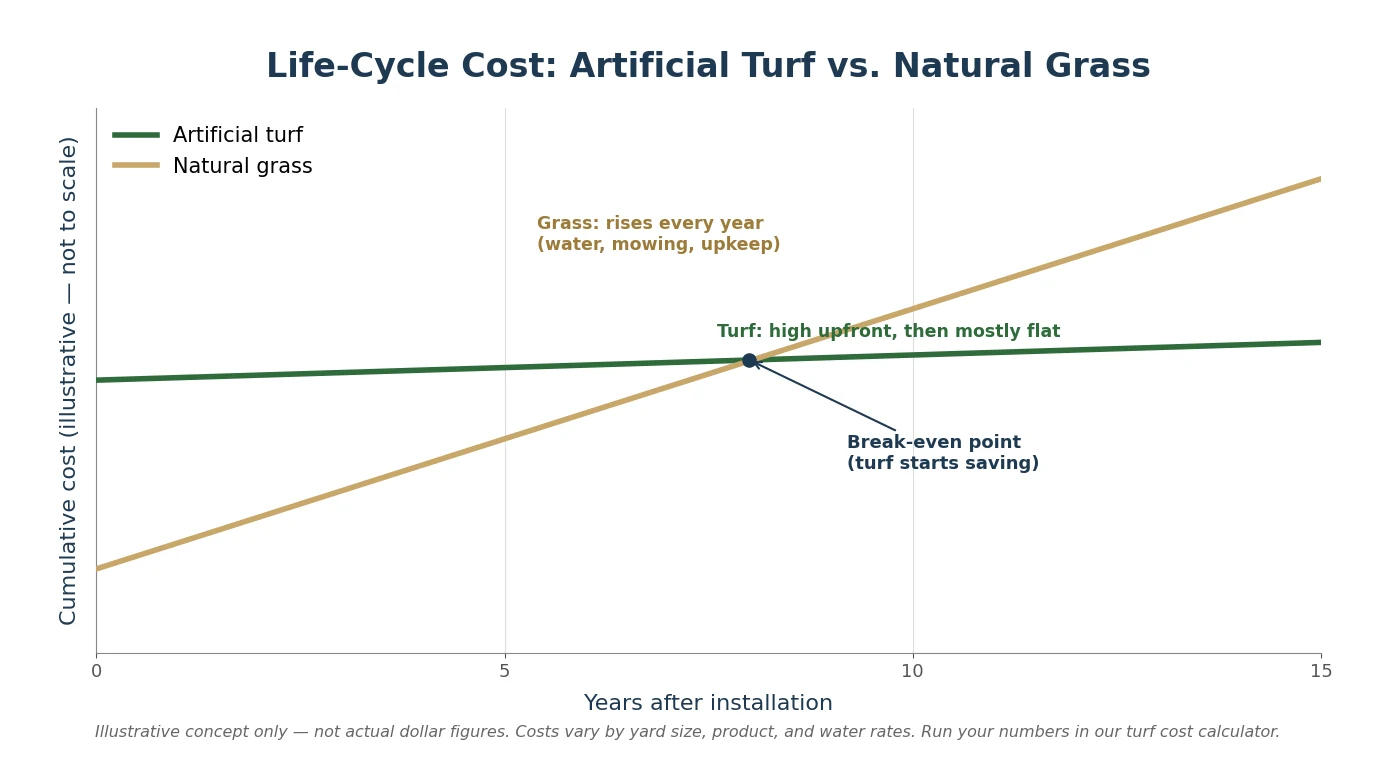
If longevity is a priority—and it should be for any yard seeing real daily use—start with a quality product. Face weight, fiber type (UV-stabilized polyethylene), and backing construction are the specs that matter most for durability. Don’t optimize only for price per square foot; a heavier-duty product that lasts five years longer almost always wins on total cost.
Pair the right product with a correctly built base and appropriate infill, and you have the foundation for a turf system that holds up in Arizona’s demanding climate.
Ready to plan your turf project?
Our team can help you pick the right product for your traffic and climate conditions—and make sure the base is done right from day one.
When you’re ready for materials, our team supplies turf, base, and infill across the Arizona service area from our Mesa yard, with free samples and hands-on guidance. Talk to a turf expert and we’ll help you plan the right setup for your yard, traffic level, and budget.