Does Artificial Turf Get Hot?
It’s the first question we hear from almost every Arizona homeowner before they pull the trigger on a turf project: “But won’t it burn?” The short answer is yes — artificial turf does get warm in direct sun. In a Phoenix July, any outdoor surface is going to absorb heat, and turf is no exception. What matters is how much it heats up, what drives that, and — most practically — what you can do about it.
We install yards across the Valley and into Utah, and we have real opinions here, earned from walking across these lawns in August. The good news: with the right product choice and a couple of simple habits, heat is very manageable. The not-so-good news: anyone telling you a particular turf “stays cool all day in full sun” is overselling. Here’s the honest breakdown.
Key takeaways:
- Artificial turf heats up in direct sun because synthetic fibers can’t cool themselves through transpiration the way natural grass does.
- Blade profile, fiber color, and infill type all affect how hot a surface gets — W-shaped and heat-reflective blades combined with lighter infill make a real difference.
- A 30-second rinse with a garden hose cools turf surface temperatures quickly — it’s the single most effective heat-management tool.
- For pet owners and kids, choosing heat-resistant artificial turf and a quality infill matters most during peak afternoon hours in AZ summers.
What Drives Turf Heat — And Why It Gets Hotter Than Natural Grass
Natural grass keeps itself cool through a process called evapotranspiration: it pulls water up from its roots and releases moisture through its leaves. That constant evaporation acts like a natural air conditioner at the blade level. Synthetic turf has no such mechanism, so on a hot day it behaves more like a hard surface — absorbing solar radiation and holding it.
A few factors push surface temperatures higher:
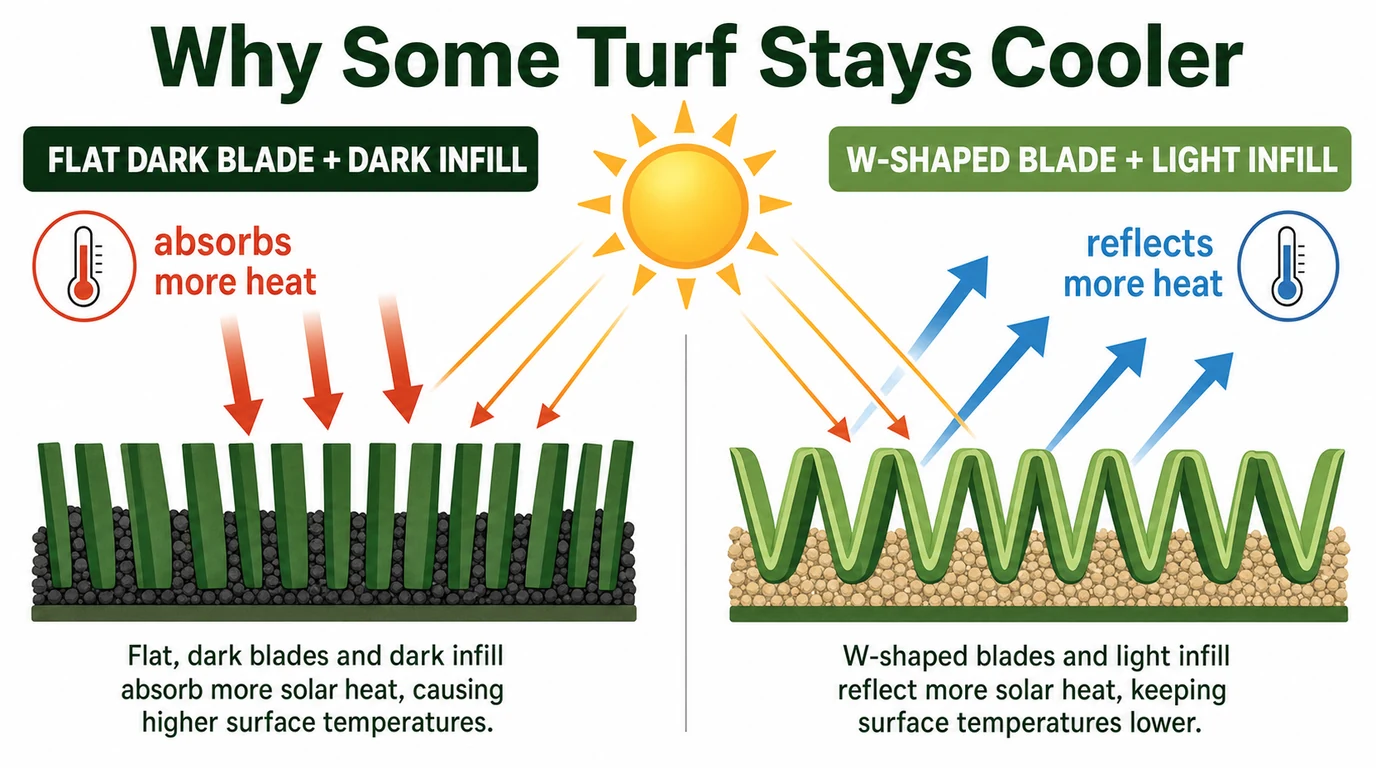
Dark infill. Traditionally, many turf installations used crumb rubber — recycled tire material that is black, dense, and excellent at absorbing and holding heat. Dark colors absorb more solar radiation. If your current turf is backed with black crumb rubber infill, that’s doing a lot of the work here.
Flat, dense blade profiles. Older turf designs used flat, uniform blades that essentially formed a continuous dark-green carpet. Less air moves through them, and they scatter less light. Newer blade geometries — W-profiles, C-channels, and similar shapes — create more surface area and air gaps, which both reduce direct heat absorption and allow more airflow.
Full, unrelenting sun. In Arizona, that means six or eight hours of intense radiation in summer. Any surface — concrete, asphalt, pavers, natural grass — gets hot under those conditions. Turf is not alone here, but it does perform differently than concrete, which radiates heat back up after sunset, or natural grass, which cools faster through moisture.
Heat-Resistant Artificial Turf: What Actually Helps
When people search for heat-resistant turf or artificial grass that doesn’t get hot, they’re usually hoping for a magic product. The reality is more nuanced — but there are genuine differences between product tiers that matter in a hot climate.
Blade Geometry and Fiber Color
The shift from flat blades to shaped profiles — often described as W-shaped, C-shaped, or “heat-reflective” — is one of the more meaningful advances in turf technology over the past decade. The goal is to scatter and reflect incoming light rather than absorbing it flat on. Multi-tone fibers (blades that mix lighter and darker green) also help, because the lighter filaments reflect more radiation.
Our Lush 80 artificial turf uses a multi-tone, textured blade that scatters light more effectively than older single-color flat designs. It’s a meaningful upgrade for Phoenix yards where blade design actually translates to real-world comfort differences.
Cooling Infill — The Bigger Lever
Blade tech helps, but infill choice may matter even more for heat management. Replacing black crumb rubber with a lighter-colored infill — silica sand, coated silica, or an organic infill — removes one of the biggest contributors to surface heat. Lighter-colored infill reflects more solar radiation rather than absorbing it, and many organic infill options also have some moisture-retention capacity that creates a mild natural cooling effect.
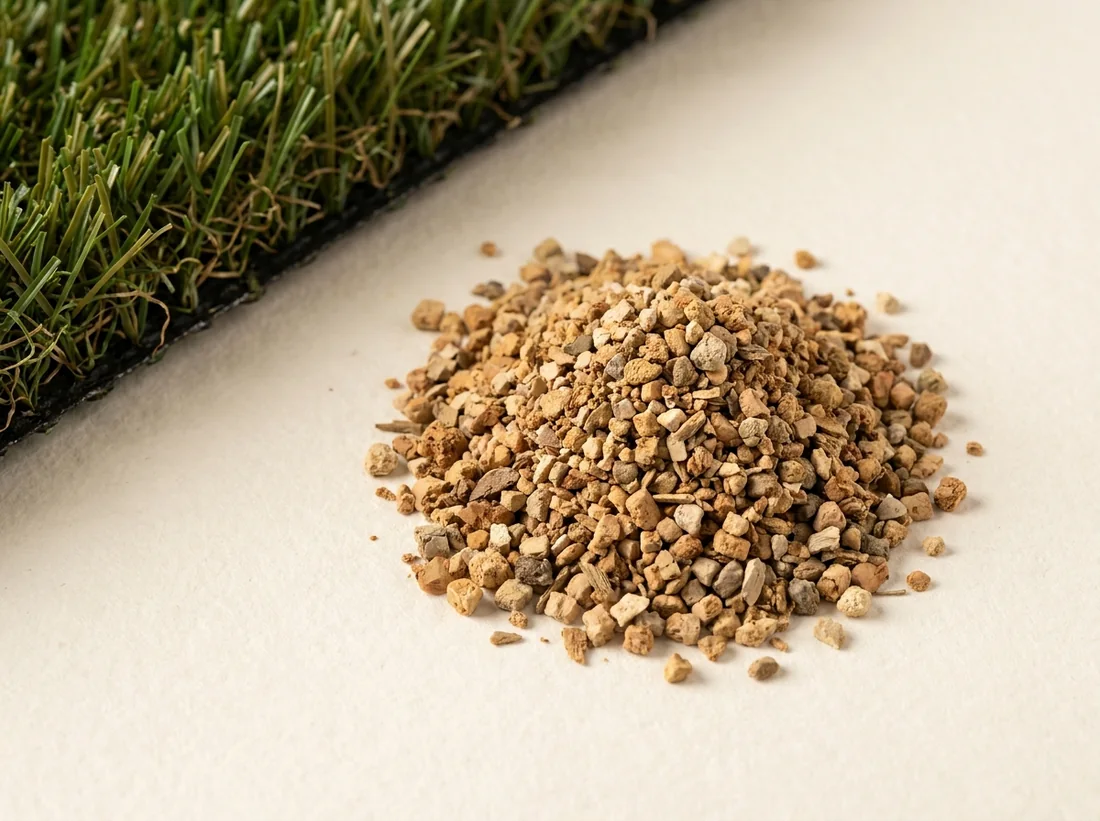
Natural Blend Pro Turf Infill Artificial Turf
Turf infill that supports blade stability, cushioning, drainage, and overall surface resilience.
View Turf Infill →Our turf infill options include coated silica products designed for hot climates, and we carry antimicrobial-coated infill that also addresses odor for pet areas. Switching infill type on an existing turf system is one of the most practical upgrades for homeowners who already have turf installed.
Shade
This one seems obvious, but it’s the most powerful tool in Arizona. A ramada, shade sail, or strategically planted shade tree can dramatically reduce the direct solar load on your turf during peak afternoon hours. We regularly recommend clients combine a good turf product with a shade structure over high-use zones — play areas, dog runs, patio turf — rather than depending entirely on blade tech to do the work.
Realistic Expectations: What “Best Artificial Grass for Hot Climates” Actually Means
Let’s be straight: no artificial grass for hot climates is completely cool in full Arizona summer sun. A product described as the “coolest artificial turf” on the market will still get warm in peak afternoon heat in Phoenix — it just won’t get as warm as older, less-optimized products. That’s an honest answer that we think matters before you invest.
Here’s what “heat resistant” realistically delivers:
- Meaningfully lower surface temperatures during the hottest parts of the day compared to old-style flat-blade, dark-infill systems.
- A surface that cools down faster when rinsed or when sun angle drops.
- More consistent comfort during shoulder hours — morning and early evening — when you actually use your yard most.
For full afternoon sun in July, managing expectations is part of the job. We tell our clients: plan to rinse before your kids or dogs go out at 2 p.m. in August. That’s just honest.
The Rinse: The Most Effective Cooling Tool You Have
We cannot overstate how well a quick rinse works. Water evaporation is extremely efficient at removing heat from a surface — it’s the same principle as sweating. A 30-second pass with a garden hose makes turf surface temperatures drop noticeably, and the effect lasts for a while in lower-humidity conditions. Phoenix’s dry heat actually makes this more effective than it would be in a humid climate, because the low humidity lets the water evaporate quickly and pull heat with it.
Practically, this means:
- Rinse your turf before afternoon play sessions or before letting pets out.
- Keep a hose-end sprinkler or quick-connect near the yard for easy access.
- In early mornings, turf that has cooled overnight will generally be fine with no rinsing needed.
For pet owners specifically, this habit is important — dog paw pads are sensitive to surface heat, and a quick rinse is far more effective than choosing a premium cool-tech product and skipping the rinse. For a deeper look at turf choices for your dogs, our post on the best artificial turf for dogs in Phoenix covers the heat + paw safety angle in detail.
Pet Paw Safety in Arizona Summers
This comes up in almost every pet-owner inquiry we get. The concern is valid — paw pads can be burned on any hot surface, and in Phoenix that’s a real consideration for concrete, asphalt, pavers, and turf alike.
A few practical guidelines we give to customers:
- Check turf with your hand before your dog goes out. If it feels too hot for your palm, it’s too hot for paw pads.
- Rinse the area first. Thirty seconds with a garden hose makes a real difference.
- Choose lighter infill, not just better blades. As noted above, infill type has a significant impact on how hot the surface actually gets.
- Avoid black crumb rubber infill if paw safety is a concern. Light-colored silica or coated antimicrobial infill runs cooler and is better for pets overall.
- Schedule outdoor time. Early morning and evening hours are when turf is most comfortable. That’s good guidance for dogs and kids alike in an Arizona summer.
Our artificial pet turf products are paired with infill recommendations specifically for pet safety and odor control — the two things pet owners ask about most.
The Arizona Reality Check
We install a lot of yards in the Phoenix metro — Mesa, Gilbert, Chandler, Tempe, and the broader Valley — and heat is part of every conversation. Arizona’s summers are genuinely extreme: 110°F air temps, intense UV, months of unrelenting sun. Our customers know this going in, and the ones who are happiest with their turf are the ones who chose the right product and understand how to manage it.
In our experience, the sweet spot is:
- A quality turf with shaped, heat-reflective blades — like Lush 80 for residential use.
- A lighter-colored infill: coated silica or a quality organic option instead of black crumb rubber.
- Shade where possible — even partial shade over the highest-traffic zones helps enormously.
- A rinse habit before afternoon use.
With those four things in place, we hear very few heat complaints. Without them — especially if dark rubber infill was used — heat complaints are the number one reason people call us to say they regret their choice.
If you’re evaluating products for a Phoenix or Valley install and want to understand how different spec choices affect heat performance, our artificial turf calculator can help you scope your project, and our team is happy to walk you through infill and product comparisons.
Utah Note: Heat Is Still Relevant, But the Season Is Shorter
Most of our Utah customers — across Salt Lake City and Provo — are thinking about freeze-thaw, drainage, and seasonal performance. But Utah summers can get hot, and the same blade-and-infill principles apply. A quality product with a coated silica infill handles both the winter heave-and-thaw cycles and the summer heat season without complaint. We’re familiar with both climates and can spec accordingly.
When you’re ready to choose materials or want help picking the right product and infill for your climate, our team supplies turf, base, and infill across the Arizona service area from our Mesa yard, with free samples and hands-on guidance. Talk to a turf expert and we’ll help you plan a setup that stays as comfortable as possible all year.