We get asked about infill constantly — usually right before someone starts ordering materials. It’s one of those details that looks simple until you realize the bags come in different weights, different products call for different rates, and pile height changes everything. Get it wrong and you’re either short (blades fall flat, turf shifts) or over-ordered (unnecessary cost, compacted surface).
This post covers what artificial grass infill does, what the typical quantity range looks like, how pile height and use type affect that range, and what to do when you’re ready to run the actual math. The exact calculation lives in our artificial turf calculator — that’s where you plug in your square footage and get a real number to order.
Key takeaways:
- For most residential installs, plan on 1 to 2 pounds of artificial grass infill per square foot as a starting range — pile height and use type determine where you land in that range.
- Infill type matters: silica sand for standard lawns, antimicrobial/coated infill for pet areas and high-traffic zones.
- Taller pile and heavier use = more infill needed.
- Skip the guesswork — use our turf infill calculator to get your exact quantity before you order.
What Artificial Grass Infill Actually Does
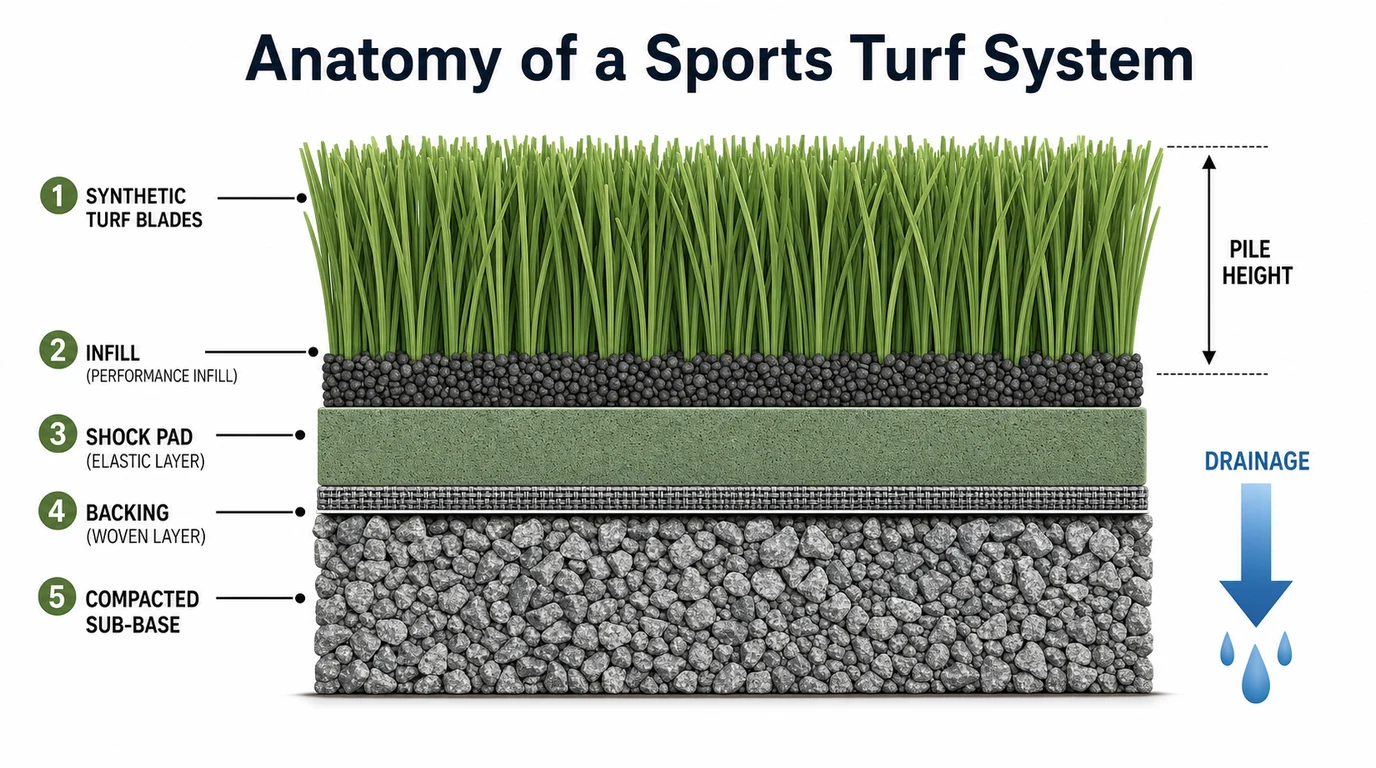
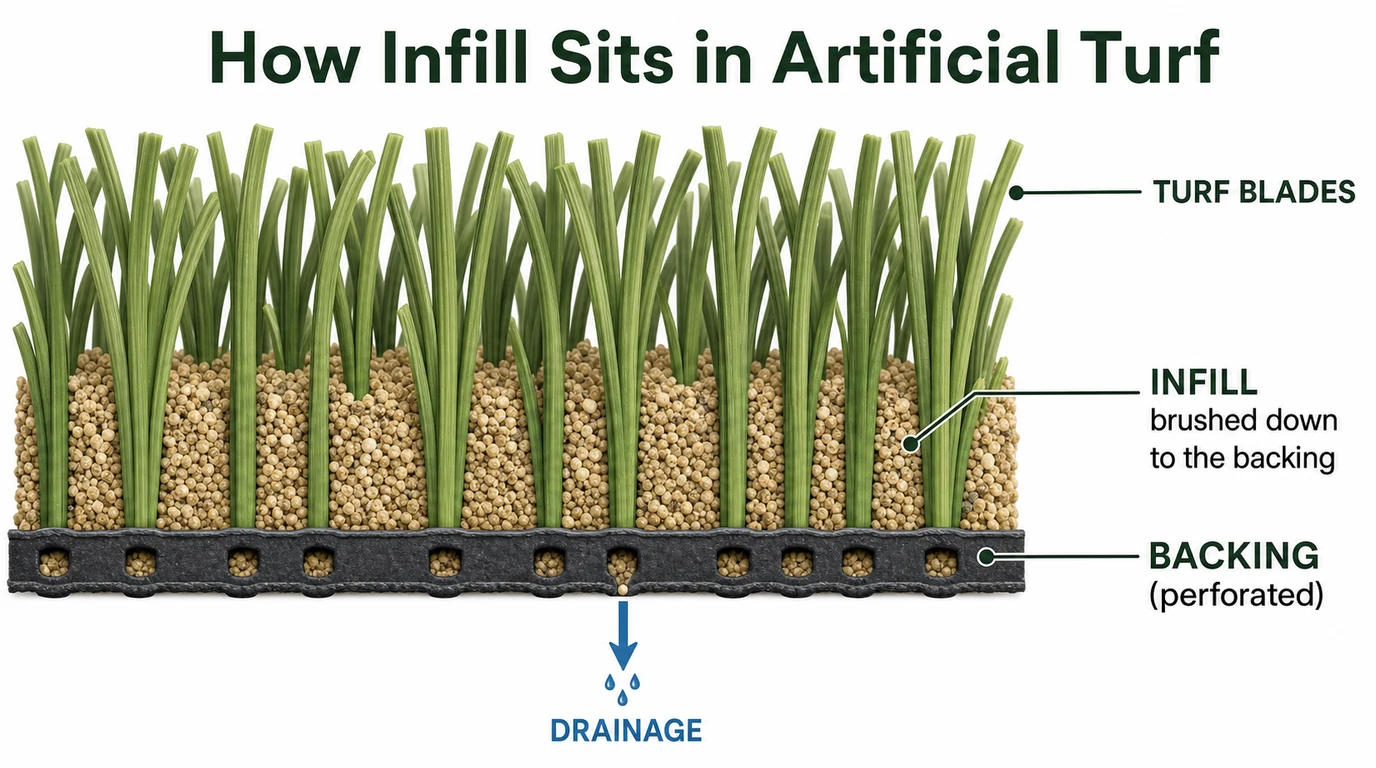
Artificial grass infill is the granular material — typically silica sand or a coated/antimicrobial product — that gets brushed down into the base of the turf blades after installation. It sits between the fibers, right at the backing, and it does several things at once.
First, it holds the blades upright. Without anything supporting them from the base, fibers lay over under foot traffic and don’t bounce back well. Infill acts as a structural cushion that keeps the pile standing — which is most of what “looking natural” means after the turf is laid.
Second, it anchors the turf. Infill adds ballast. Combined with perimeter fastening and seam adhesive, the weight of the infill keeps the turf from shifting, wrinkling, or lifting at edges in wind.
Third, it contributes to drainage. A properly filled turf lets water pass down between the blades and through the backing without pooling. An under-filled turf can actually slow drainage because the fibers mat together.
Finally, it provides cushion. For kids’ play areas, pet zones, or any lawn where people spend time on the ground, infill adds a layer of underfoot comfort and impact absorption.
How Much Artificial Grass Infill Do You Need?
The standard guidance in the industry — and what we use as a baseline in the field — is 1 to 2 pounds of infill per square foot. That’s a range, not a single number, and the spread matters.
Where you land within that range comes down to three factors:
1. Pile height. A short-pile turf (30mm and under) typically needs less infill — you’re filling a shallower column of fiber. Longer pile turf (35–40mm and up) needs more to properly support the blades and fill the system. If you’re working with a taller product, budget toward the higher end of the range.
2. Use type. A decorative side yard or a rooftop installation sees little traffic and can get away with the lower end of the range. A backyard lawn that gets daily foot traffic, kids, and pets needs more to stay resilient. High-traffic commercial installs often specify infill rates on the higher side to maintain pile recovery over time.
3. Turf product specs. Different turf products have their own recommended infill rates based on their backing, stitch rate, and fiber construction. When you shop our turf infill options or choose a specific turf product, the spec sheet or our team will give you the manufacturer’s recommended rate for that product. Follow that rather than guessing.
For a 1,000 square foot lawn at the midpoint of the range (1.5 lbs/sq ft), you’re looking at roughly 1,500 pounds — or about 15 to 20 bags depending on bag size. That adds up fast if you underestimate, and it’s a real cost if you overestimate. This is exactly why we built the calculator.
Calculate Your Infill Quantity
Enter your square footage and pile height to get an exact infill estimate — plus turf yardage and base material quantities.
Types of Artificial Grass Infill
Not all infill is the same material, and the choice affects performance, pet safety, and how the turf ages.
Silica Sand
Silica sand is the workhorse of residential turf infill. It’s affordable, readily available, and performs well for standard lawns, front yards, and decorative areas. The grains are rounded and consistent, which means they brush into the pile evenly and don’t compact aggressively over time.
For most non-pet residential lawns in Arizona and Utah, silica sand is the default choice and it holds up well.
Coated / Antimicrobial Infill
For pet turf installations — and anywhere odor control is a priority — standard silica sand isn’t the best option. Coated infill products are treated with antimicrobial agents that reduce the bacteria and odor that build up from pet waste.
Coated infill generally costs more per bag than plain sand, but in a dog yard it’s a worthwhile upgrade. The coating doesn’t last forever, so high-use pet areas benefit from periodic infill refreshes — but you’re starting with a much better baseline than sand.
Crumb Rubber
Crumb rubber (recycled tire material) is common on sports turf and some commercial installs. It adds cushion and is widely used on athletic fields. For residential lawns, it’s less common — it runs hotter than sand infill and the small rubber particles can track inside. If you’re installing sports turf or an athletic surface, crumb rubber may come into the spec — but for a backyard lawn, we generally steer toward sand or coated products.
More Infill for Pet Areas and High-Traffic Zones
Pet areas deserve a separate note. Between the drainage demands, the odor issues, and the added traffic from a dog running the same path every day, pet turf systems are typically specified with more infill, not less. More infill means better blade support in those worn paths, better drainage distribution, and more surface area for the antimicrobial treatment to work against.
If you’re building a dog run or any dedicated artificial pet turf area, plan your infill quantities at the higher end of the range and use a coated antimicrobial product throughout. We see a lot of pet installs that used plain sand at low rates — within a year or two the pile is flattened and the odor control is gone.
Do You Need Infill at All?
Occasionally we get this question — usually from someone who found a “no-infill” product marketing pitch. The honest answer: most standard turf products need infill to perform as designed. Without it, blades fold over and don’t recover, turf shifts, and drainage suffers.
Some high-end turf systems with engineered backing can tolerate reduced infill rates, and a few products specifically designed for that are sold as low-infill. But for the vast majority of installs — residential lawns, pet yards, commercial landscapes — infill is a necessary part of the system.
If you’re looking at a specific product and wondering whether it needs infill, check our turf infill page or talk to the team. We’ll look at the product spec and tell you what it actually needs.
Putting the Math Together: Use the Calculator
Here’s the practical flow when you’re planning a turf install:
- Measure your area (square footage).
- Look up the pile height and manufacturer-recommended infill rate for your turf product.
- Use the 1 to 2 lbs/sq ft range as a sanity check against the spec.
- Plug your numbers into the artificial turf calculator — it outputs infill quantity, turf yardage, and base material estimates in one go.
- Order with a small buffer (5–10%) to account for edges, top-ups, and any areas that need a bit more.
That’s the process our crews use for every job, and it keeps material orders tight. The calculator does the arithmetic — your job is to have accurate square footage and know your pile height.
For the base material side of the equation, there’s also a separate sub-base turf calculator that handles crushed base and decomposed granite quantities.
Regional Notes: Arizona and Utah Installs
A couple of quick field notes for our markets:
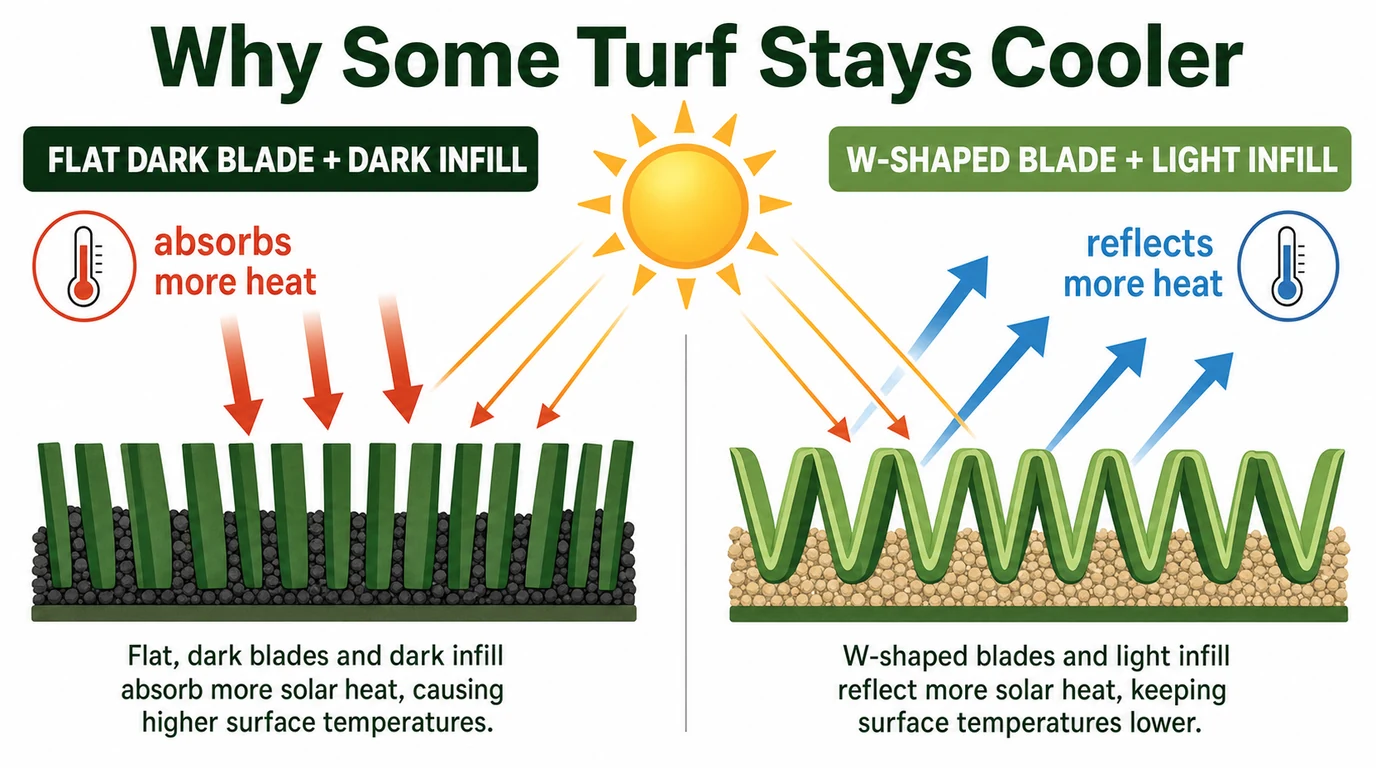
Arizona: Heat is the main variable. Crumb rubber infill in full-sun AZ yards gets genuinely hot in summer. We generally spec silica sand or coated products for residential AZ installs — better heat behavior underfoot, especially for kids and dogs. If your yard runs full afternoon sun, it’s worth a conversation about infill type before you order.
Utah: Freeze-thaw cycles are the variable here. Infill compacts differently in climates where the ground heaves and thaws repeatedly. We’ve seen under-filled installs in Utah develop surface irregularities after a few winters. Getting to the right fill rate at install time matters more in UT than in a temperate climate — it gives the turf system the ballast it needs to hold through heaving.
A Note on Topping Off Infill Over Time
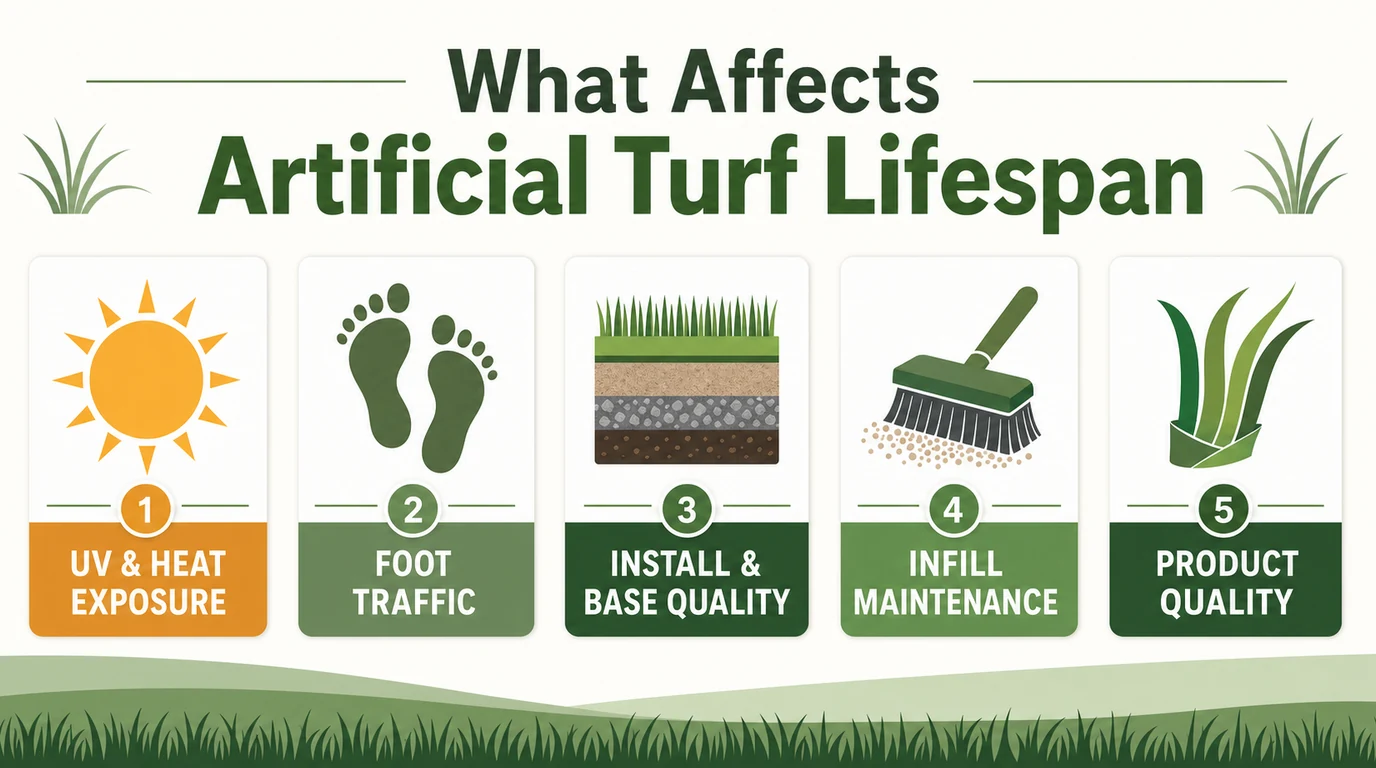
Infill isn’t a one-time application. Over time — especially in high-traffic areas — infill migrates, compacts, and moves toward the perimeter. It’s normal and expected. Part of routine turf maintenance is checking infill levels annually and brushing in fresh material where it’s run low.
For a step-by-step on installation and ongoing maintenance, our how to install artificial turf guide walks through the full process including infill application technique and how to use a power broom to set infill evenly.
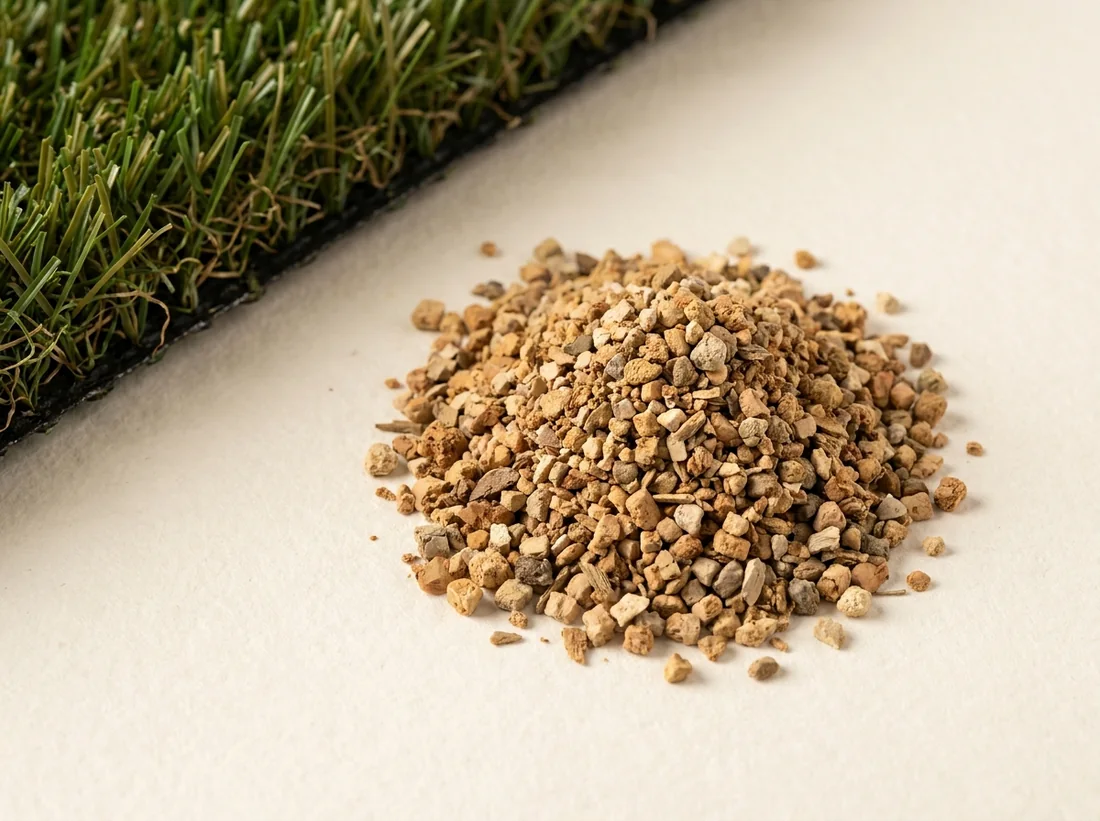
Natural Blend Pro Turf Infill Artificial Turf
Turf infill that supports blade stability, cushioning, drainage, and overall surface resilience.
View Turf Infill →When you’re ready for materials, our team supplies turf, base, and infill across the Arizona service area from our Mesa yard, with free samples and hands-on guidance. Talk to a turf expert and we’ll help you plan the right infill type and quantity for your specific project.